
Child Behind in Reading? Here's Where Parents Start (September 2026)
Not every child who avoids reading is behind, and not every child who's behind needs the same fix. Figuring out which situation you're actually in is the first step toward helping your child catch up in reading without spinning your wheels on the wrong approach. Here's what to look for and where to start.
TLDR:
- Reading gaps tend to widen over time, so acting early matters more than waiting to see if your child catches up
- Request a dyslexia screening from your school in writing before starting phonics drills, because dyslexia accounts for 80% of learning disability diagnoses
- Phonics is the only widely accepted reading instruction method; at least 26 US states now require it in schools
- Just 5 to 10 minutes of daily read-aloud practice builds real skill, and consistency beats duration every time
- Super Teacher is a tutoring app used by over 100,000 families that teaches phonics through voice-based lessons for about $20 per month
How to Tell If Your Child Is Actually Behind in Reading
Not every child who resists reading is behind. Some kids just need a little more coaxing. The real question is whether your child lacks the skill or simply the motivation.
A few concrete things to watch for, by grade:
- Kindergarten: still can't connect letters to their sounds, or doesn't recognize most letters of the alphabet by mid-year
- First grade: can't sound out simple three-letter words like "cat" or "sit" by spring
- Second grade: reads word by word, slowly, with frequent guessing instead of sounding out
If your child avoids reading because books feel hard, that's a skill gap. If they avoid reading but can sound out words fine when pushed, that's more likely a motivation issue. The distinction matters because the fix is different, and catching a skill gap early is far easier than closing one later.
Why Reading Gaps Happen (and Why Early Action Matters)
Reading gaps rarely appear out of nowhere. The most common causes are inconsistent phonics instruction at school, limited reading practice at home, and unidentified learning differences like dyslexia, often a combination of all three.
What makes this urgent is how reading compounds. A child who reads fluently early moves from "learning to read" to "reading to learn" faster, which pays off in every subject. A child who stays behind tends to see that gap widen over time. According to the Nation's Report Card, average reading scores for fourth and eighth graders continued to decline in 2024, steepening a trend that started before the pandemic. Waiting to see if a child "grows out of it" is rarely a winning strategy.
Consider a Dyslexia Screening First
Before jumping into at-home reading drills, it's worth ruling out dyslexia. According to the International Dyslexia Association, dyslexia affects an estimated 5% to 17% of the U.S. population and accounts for roughly 80% of all learning disability diagnoses. A child with unidentified dyslexia won't respond to the same interventions as a child who simply needs more phonics practice.
Requesting a screening is straightforward: ask your child's teacher or school psychologist in writing. Most public schools are required to assess your child when a parent raises a concern. The screening looks at phonological awareness, decoding, and fluency. If dyslexia is identified, you'll want structured literacy approaches instead of general reading practice. Getting that answer early keeps you from spending months on the wrong fix.
Use Phonics to Teach Reading at Home
Phonics means teaching your child to decode words by sounding them out, letter by letter. You start with letter sounds, then move to simple three-letter CVC words (cat, sit, dog), then blends (fr, bl, tr), then digraphs (sh, ch). Each step builds directly on the last.
This method is now the only widely accepted approach in reading education. At least 26 states have passed laws mandating science of reading instruction in schools since 2022. Phonics works for most kids, but it's especially effective for children who are behind, boys who typically lag girls in early reading development, and children with dyslexia.
At home, start where your child actually is. If they don't know all their letter sounds cold, begin there before touching words.
Read Aloud With Your Child Every Day (Even 5 to 10 Minutes Counts)
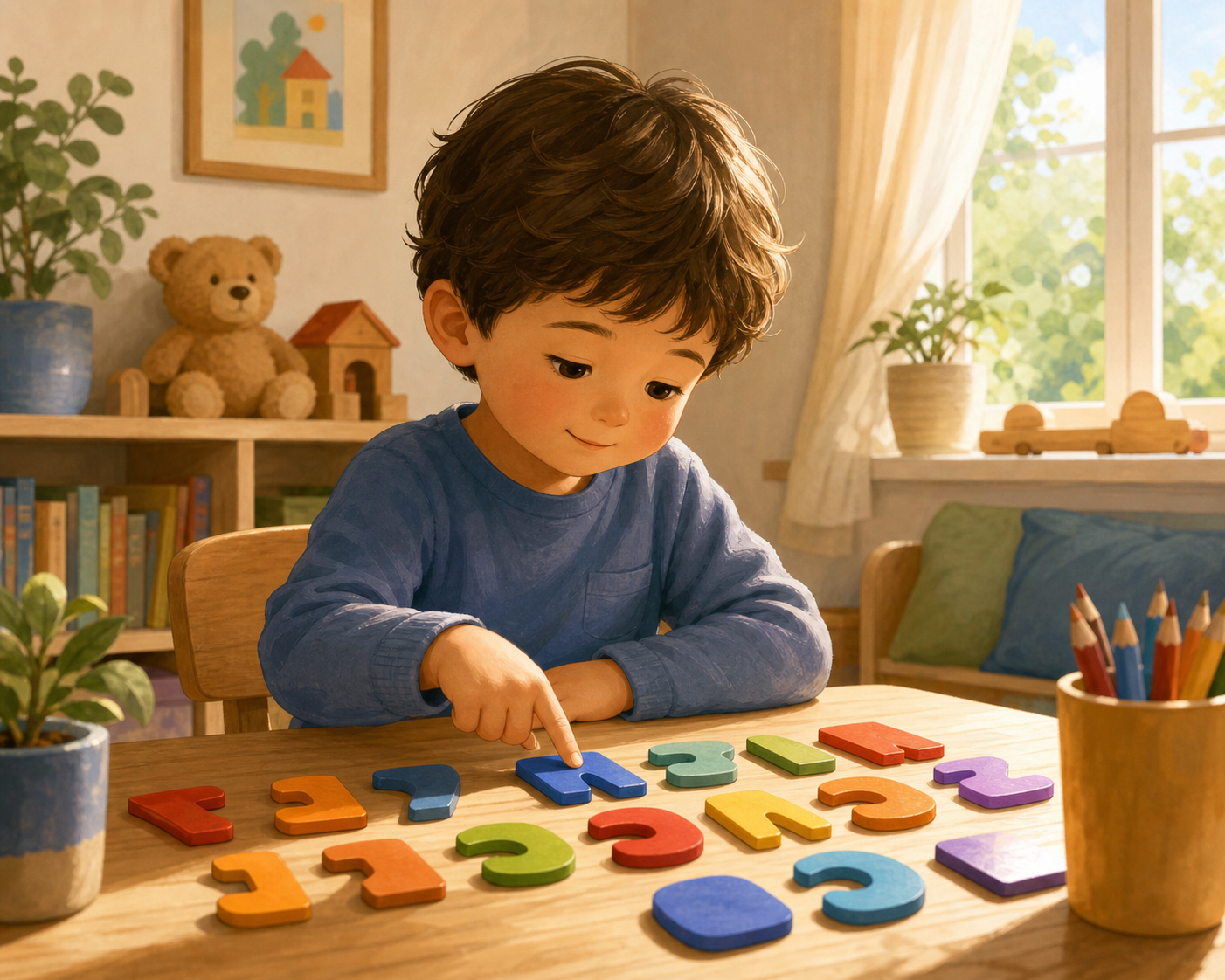
Reading aloud every day is one of the most research-supported things a parent can do, and the bar is low: 5 to 10 minutes counts. One short children's book before bed is enough. What matters is consistency, not duration.

Move your finger along the words as you read. This quietly teaches how reading works mechanically: left to right, word by word, down to the next line. Children absorb this through repeated exposure, without any formal instruction. Occasionally pause and ask your child to read a single word or short phrase, turning passive listening into active practice in a low-stakes setting.
Understand the Difference Between Decoding and Encoding
Reading and writing look like two separate school subjects, but they're deeply connected. Decoding means reading a word aloud; encoding means spelling or writing it out. A child behind in one is often behind in the other, even if parents only notice the reading side.
Practicing encoding directly helps both skills. Ask your child "how do you think you spell dog?" or "how do you spell bat?" There's no grade attached, just an opportunity to build the same sound-to-letter awareness that decoding requires, approached from the opposite direction. More reading practice improves spelling over time too, which is one more reason early intervention compounds.
How to Scaffold Without Just Giving the Answer
When your child stalls on a word, the instinct is either to read it for them or to wait silently until they figure it out. Neither works well. The better move is somewhere in between.
Take the word "bat." Instead of saying it, try: "What sound does B make? Good. What about A? Now T. Say them together." You're guiding them to the answer without handing it over. Once they get it, move on. Over time, skip a step or two and let them fill in the gaps themselves.
This mirrors how effective teachers think about instruction: first the teacher demonstrates, then you work through it together, then the child does it alone. The scaffolding shrinks gradually as the skill grows. The goal is always independence, not dependence on the prompt.
Build Fluency Through Repeated and Consistent Practice
Fluency is the ability to read accurately, at a comfortable pace, and with expression. A child who reads one halting word at a time may simply need more volume. When decoding each word takes effort, little mental capacity remains for understanding what the sentence means. Fluency is what unlocks comprehension.
The main way to build it is repetition. Rereading a familiar book, a short passage, or even a single paragraph several times helps a child move from labored sounding-out to smooth, automatic reading. It feels redundant to adults, but for kids it's genuinely how the skill solidifies.
Create a Consistent Daily Routine
Reading progress comes from showing up regularly, not from marathon sessions on weekends. A short practice window at the same time each day, whether after school, before dinner, or right before bed, becomes routine faster than you'd expect. When it's predictable, there's less resistance.
Frame it the way you frame meals: this is just what we do. One book, one lesson, one short session. That's enough. Over weeks, it adds up to something real.
When your child reads their first full sentence on their own, make a big deal of it. Small wins build the confidence that keeps them coming back tomorrow.
When to Bring in Extra Support
Home practice covers a lot, but some children need more structured intervention than a parent can provide alone. If your child has been working consistently for several weeks without gaining ground, that's a reasonable signal to escalate.
Start with the classroom teacher. Ask directly what reading level your child is at, what the school is doing about it, and whether a formal evaluation makes sense. From there, options include a reading specialist through the school or a private literacy tutor.
Support Option | Cost | What It Offers | Best For |
|---|---|---|---|
Classroom teacher | Free | Reading level check, school-based resources, formal evaluation referral | First step; understanding where your child stands |
School reading specialist | Free | Structured literacy intervention through the school | Children who qualify for in-school support services |
Private literacy tutor | $40 to $100+/hour | One-on-one, specialized phonics or structured literacy instruction | Children who need intensive, personalized support |
Super Teacher (tutoring app) | ~$20/month or $100/year | Voice-based phonics lessons, daily practice, parent progress emails | Consistent at-home practice for ages 3 to 10 |
Private tutors who specialize in reading can run $40 to $100 or more per hour, and finding one with an open slot that fits your schedule adds friction on top of that cost. The right level of support depends on how far behind your child is and what your family can realistically keep up with. For a broader comparison of costs and options, the tutoring apps for kids parent guide walks through each type in detail.
How Super Teacher Helps Children Who Are Behind in Reading
Super Teacher is a conversational tutoring app used by over 100,000 families, built around the phonics-based approach covered throughout this article. Its flagship Learn to Read course teaches CVC word families, sight words, blends, and digraphs through voice-based lessons written by former elementary school teachers. Every question is directed at your child individually, replicating the one-on-one interaction that makes tutoring work. At roughly $20 per month (or $100 per year for the whole household), it fits alongside what you're already doing at home. After each lesson, you get an email showing exactly how your child performed and where they struggled. The camera never turns on, and the microphone only activates when a question is asked.
Final Thoughts on Helping Your Child Catch Up in Reading
Reading is a skill, and skills grow with the right practice. Start with phonics, keep sessions short, and trust the process. Each small win builds the confidence your child needs to keep going.
FAQ
How do I teach my child to blend sounds and read simple words at home?
Start with individual letter sounds before blending anything. If your child doesn't know all their sounds cold, that comes first. Once they do, practice CVC words (cat, sit, dog) by saying each sound separately, then running them together: "C... A... T... cat." Keep sessions short and consistent; five minutes daily beats a long weekend session.
What are the most popular reading apps for kindergarten and first grade, and how does Super Teacher compare to options like ABCmouse or Khan Academy Kids?
Most reading apps for kindergarten and first grade, including ABCmouse and Khan Academy Kids, offer games, videos, and digital practice, which puts them closer to drill-and-practice than actual tutoring. Super Teacher works differently: a voice-based tutoring app asks your child questions one-on-one, adjusts based on their answers, and teaches phonics progressions the way a private reading tutor would, instead of having children tap through exercises independently. For a full comparison of what separates tutoring apps from drill apps, see the tutoring apps guide for kids.
What's the best technology product to help my child catch up in reading?
The right pick depends on what your child actually needs: if they're behind in reading and need real instruction, a tutoring app that delivers conversational, phonics-based lessons will do more than one that offers quizzes or content browsing. Super Teacher is designed for ages 3-10 and its Learn to Read course covers CVC words, blends, digraphs, and sight words through voice lessons written by former elementary teachers.
What are the best alternatives to IXL for a child who is behind in reading?
IXL gives children practice problems and tracks scores, but it does not teach. If a child answers incorrectly, it marks it wrong without walking them through the concept. For a child who is genuinely behind, you want something that provides real instruction, not just assessment or repetition. Options like Super Teacher deliver the guided, step-by-step explanation that a reading specialist or private tutor would give.
How do I know if my child's reading struggles are from dyslexia or from gaps in phonics instruction?
Request a screening through your child's school in writing. Most public schools are required to run one when a parent raises the concern. The screening checks phonological awareness, decoding, and fluency, and the results tell you which direction to go: structured literacy for dyslexia, or targeted phonics practice for an instruction gap. Getting that answer early keeps you from spending weeks on the wrong approach.