
How to Teach Letter Sounds to Your Child (October 2026)
Your child might already know their ABCs, but that doesn't mean they know how to read yet. The part most parents skip is teaching letter sounds before letter names, and in a sequence that lets kids start sounding out actual words right away. Once you get that order right, the rest moves faster than you'd expect.
TLDR:
- Teach letter sounds before letter names; sounds are what let a child actually decode words like "bat."
- Most children are ready to start at ages 3 to 4, well before kindergarten.
- Skip alphabetical order; start with S, M, T, P, and N paired with short /a/ so your child can read real words fast.
- The biggest mistake parents make is saying "buh" for /b/; keep stop consonants short or blending falls apart.
- For parents that want to help their child outside of school, Super Teacher's Learn Letter Sounds course delivers one-on-one tutoring with voice transcription built for young children's voices, vetted by former elementary school teachers.
Why Letter Sounds Come Before Letter Names
Knowing that the letter is called "bee" tells a child almost nothing about how to read the word "bat."
What actually lets a child decode a word is knowing what sound each letter makes. "B" makes the /b/ sound. "A" makes the /a/ sound. "T" makes the /t/ sound. Put them together, and you get "bat." Letter names are labels. Letter sounds are the tools.
Reading instruction grounded in the Science of Reading starts with phonics and phonemic awareness, alongside sight words, for exactly this reason. A child who knows letter sounds can start sounding out words right away. A child who only knows letter names has to learn a second layer before any of that becomes possible.
What Age to Start Teaching Letter Sounds
Most children are ready to start learning letter sounds between ages 3 and 4, though some show readiness even earlier than parents expect, and a good phonics app for kids can help gauge that readiness.
The signs are straightforward: a child who notices letters on signs, asks what words say, or can sit through a short activity for a few minutes is likely ready. That bar is lower than most parents expect: a child doesn't need to hold a pencil well or know their ABCs cold before starting.
Since most children are ready by age 3 or 4, waiting until kindergarten to start leaves time on the table. A pre-k readiness checklist can help parents start earlier. A 4-year-old who knows letter sounds before school starts gets more out of every reading lesson from day one.
What Order to Teach Letter Sounds
Alphabetical order feels logical but works poorly in practice. Teaching A, B, C in sequence means a child waits a long time before they can build even a simple word.
A more effective approach follows one rule: every new sound you introduce should immediately unlock real words the child can practice. In practice, that means starting with a small set of sounds that combine quickly into readable words. Common starting consonants include S, M, T, P, and N, paired with short /a/, which already gives a child words like "sat," "mat," and "tap." From there, introduce new consonants one at a time, then layer in the remaining short vowels as you go: /i/, /o/, /u/, and /e/. Each addition should open up a fresh batch of words the child can sound out right away.
The Direct Instruction Method for Teaching Letter Sounds
Say the sound out loud, give a word that uses it, then ask the child to repeat it back.
For /m/, you might say: "This letter makes the /m/ sound. Like 'mat.' Now you try: what sound does this letter make?" Teachers call this "I do, we do, you do." You model it, practice it together, then step back and let the child do it alone. Each step removes a little support before handing control back to them.
That same gap between knowing a label and knowing how to use it shows up in math too. A child who can count on fingers still needs to learn the logic behind how to teach addition to kindergarteners, and a child who can name a letter still needs to learn its sound. Pointing at a letter and saying its name skips the active part. The child needs to hear the sound clearly, connect it to a real word, and produce it themselves.
How to Use Multisensory Activities to Reinforce Letter Sounds
Hearing a sound once rarely locks it in. Practice through touch and movement gives the brain more ways to hold onto it.
A few activities that work well at home:
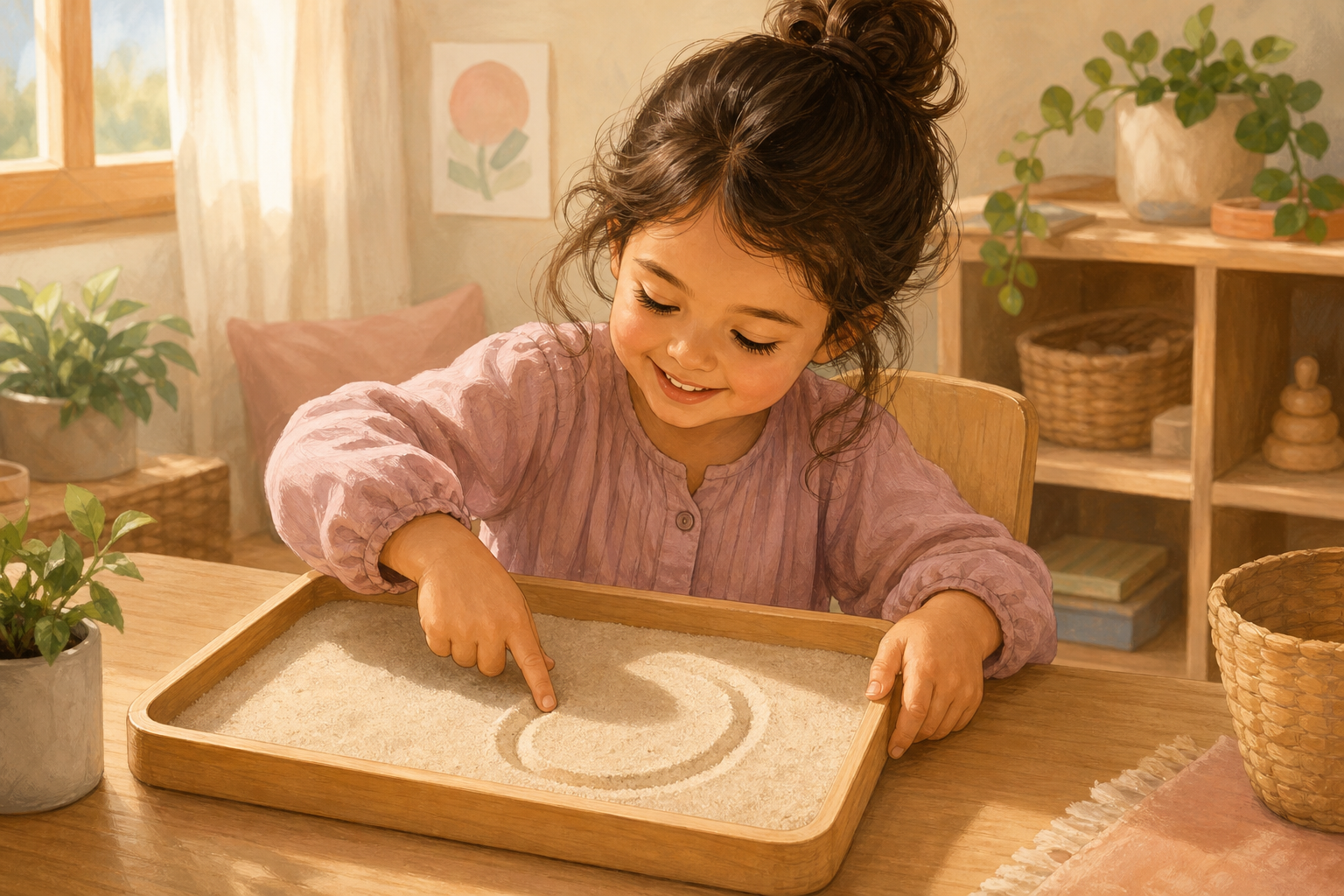
- Trace the letter in a thin layer of sand or salt while saying its sound out loud. The texture slows the child down and connects the feel of the shape to the sound.
- Roll play dough into the letter, then say a word that starts with that sound. Forming the shape by hand reinforces it differently than looking at a flashcard.
- Link each letter to a concrete image or action. /S/ is a snake that hisses. /B/ is a ball you bounce. When a child forgets the sound, the image gives them a way back in.
- Clap or jump each time they say the sound in a short list of words. Movement helps younger children stay engaged longer than sitting still allows.
None of these require special materials, though parents weighing tutoring apps for kids will find many build in similar multisensory activities. The goal is repetition through different senses, so the sound attaches to something beyond just the look of the letter on a page.
Common Mistakes Parents Make When Teaching Letter Sounds
A few well-intentioned habits can quietly slow a child down.
- Saying "buh" instead of /b/. Adding a vowel after consonants is the most common error. When a child blends "buh-a-tuh," they get "buhattuh," not "bat." Keep stop consonants short and clipped.
- Teaching letter names before sounds. "Bee, ay, tee" cannot be blended into anything. Sounds first, names later.
- Introducing too many letters at once. Three to five letters, practiced until solid, beats ten letters half-learned. Move on only when the child can produce a sound without hesitation.
- Moving on too quickly. One correct answer is not mastery. A child needs to recall the sound across multiple sessions before it sticks.
Mistake | Why It Hurts | What to Do Instead |
|---|---|---|
Saying "buh" for /b/ | Child blends "buh-a-tuh" and hears "buhattuh" instead of "bat" | Keep stop consonants short and clipped, no added vowel |
Teaching letter names before sounds | "Bee, ay, tee" cannot be blended into any word | Teach sounds first; introduce names once sounds are solid |
Introducing too many letters at once | Ten letters half-learned beats three to five letters mastered | Move on only when the child recalls a sound without hesitation |
Moving on after one correct answer | One right answer is not mastery; the sound won't stick | Require consistent recall across multiple sessions before moving forward |
How to Practice Letter Sounds Every Day Without It Feeling Like Homework
Short bursts work better than long sessions. A one-minute review in the car, a quick question at dinner, a sound tucked into something the child is already doing. That kind of repetition adds up fast.
A few ways to weave it in:
- Play "I spy" with sounds instead of letters. "I spy something that starts with the /s/ sound." Works anywhere.
- Ask one sound question before meals. Point to a magnet, a cereal box, or a word on the table.
- During car rides, say a word and ask what sound it starts with. Then flip it: you give the sound, they name a word.
- When reading a bedtime book, pause on a familiar letter and ask the child what sound it makes. Ten seconds, done.
A child who hears a sound three times a day in different settings remembers it far better than one who drills for twenty minutes once a week.
How to Know When a Child Has Truly Learned a Letter Sound
Recognizing a letter and recalling its sound under pressure are two different things.
A child who hesitates, or who gets it right only when letters appear in a familiar order but stumbles when you shuffle them, hasn't fully learned the sound yet. Familiarity is the first step, but the goal is automaticity: the sound comes back instantly, without effort, every time.
A simple test: hold up a letter card and see how fast the child responds. If they pause, that sound needs more practice. If they answer without hesitation, in any order, across different days, that sound is solid. Speed matters because reading requires blending sounds in real time. A child who has to stop and think at each letter loses the thread of the whole word before reaching the end of it.
What Comes After Letter Sounds: Blending Into Words
Once a child knows letter sounds cold, blending is the next step. You say each sound in sequence, then push them together: /b/... /a/... /t/... "bat." It feels mechanical at first, but it clicks fast.
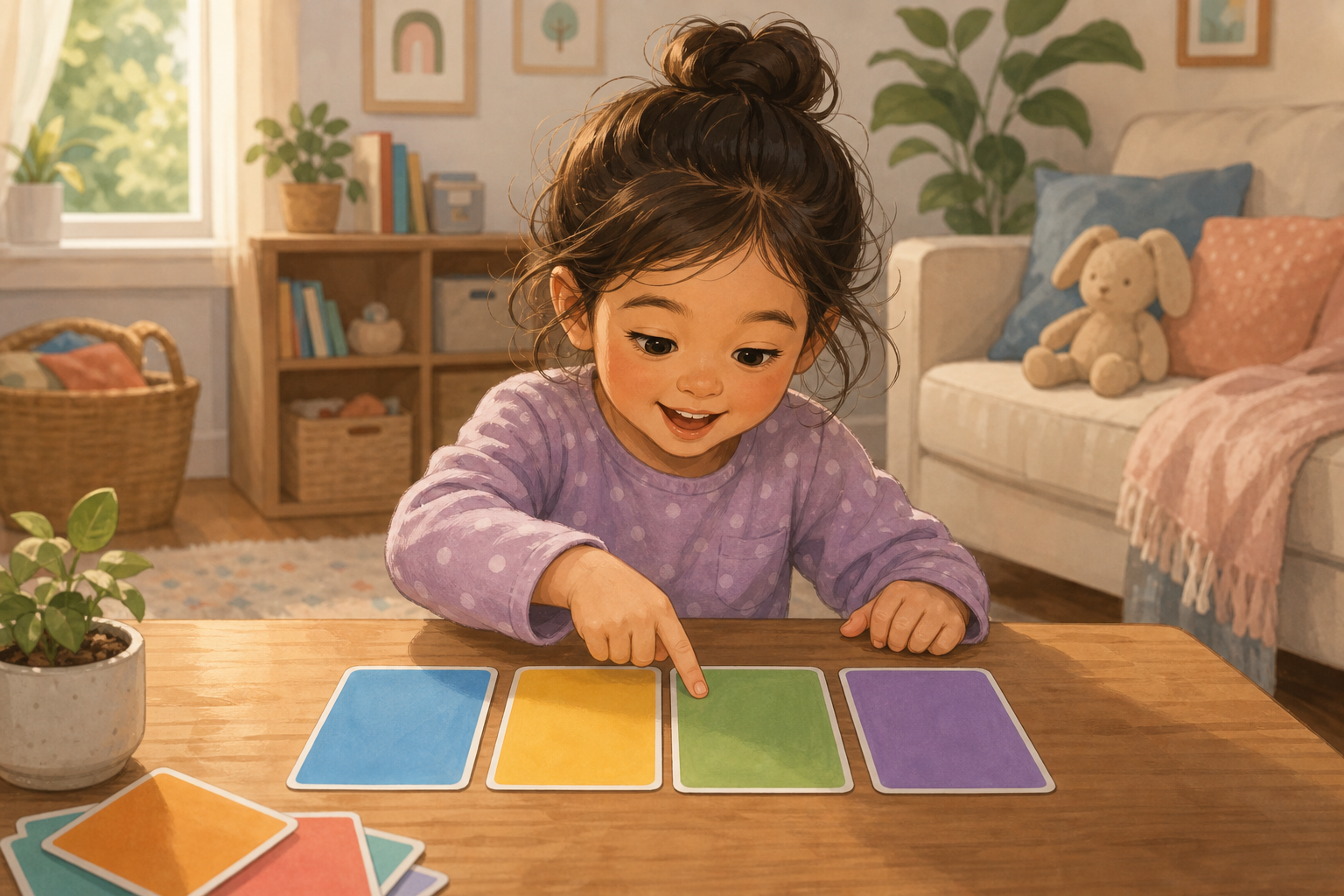
The standard progression starts with simple three-letter CVC words like "sat," "mat," and "pet," since these are the simplest building blocks a child can sound out one letter at a time. From there, word families speed things up even further: if a child can read "cat," changing just the first letter gives them "bat," "hat," and "rat" almost for free. Once that pattern feels solid, blends like "tr" and "bl" are the next step up, since now the child is combining two consonants before a vowel instead of just one, opening up words like "trip" and "black." After blends, digraphs like "sh" and "ch" come next, because these pairs of letters represent a single sound that neither letter makes on its own.
The payoff arrives quickly. A child who knows letter sounds and learns to blend can often read their first full sentence within a single lesson. That moment, "the rat sat" spoken out loud for the first time, is what all the sound drilling was building toward. You can see how that progression unfolds in how Super Teacher works.
How Super Teacher Teaches Letter Sounds to Young Children
For parents that want to help their child master letter sounds at home, the Super Teacher app is a great option. Super Teacher is a conversational tutoring app built to work like a real one-on-one tutor rather than a set of generic drills. A child hears a question out loud, answers out loud, and the lesson responds to what they actually said, the same back-and-forth a private tutor would use in person. Every lesson is pre-written and vetted by teachers on Super Teacher's staff before a child ever hears it, so nothing is generated on the fly.
Super Teacher's Learn Letter Sounds course puts the approach in this guide into practice as a one-on-one tutoring session. An animated tutor speaks directly to the child, walks them through each sound, and asks them to say it out loud, listening with voice transcription calibrated for young children's voices, including age-typical pronunciations that younger speakers produce. That listening is what makes the feedback work: when a child gets a sound wrong, they get corrective feedback on the spot, the same way a patient human tutor would respond.
Every lesson is crafted and vetted by former elementary school teachers on our staff, so the instructional sequence follows the same sound-first, high-frequency-consonants-first order this guide recommends. In practice, lessons for pre-K and kindergarten run 5 to 8 minutes, can be paused and resumed, and are available any time without scheduling in advance, which fits naturally into a homeschool program for ages 3-5.
One account covers unlimited tutoring for every child in the household across every subject. A full year of Super Teacher typically costs less than a single lesson from a traditional tutoring agency, which is part of what Super Teacher is built to deliver. For more on how the sessions work, see what Super Teacher offers parents.
Final Thoughts on Teaching Letter Sounds the Right Way
Getting the sounds right early makes everything that comes after easier. Your child doesn't need a perfect setup or a lot of time, just steady repetition and clear, clipped sounds. Start where they are, build one sound at a time, and the reading takes care of itself from there.
FAQ
What's the best order to teach a child letter sounds when you're starting from scratch?
Skip alphabetical order and start with a small cluster of high-utility consonants paired with short /a/, then add one new sound at a time so every new letter immediately opens up real words to practice. For the full sequence and example words, see the section above on what order to teach letter sounds.
How do I know if my child has actually learned a letter sound or just memorized the order?
Shuffle the letter cards and check recall across different days. If your child hesitates or only gets it right in a familiar order, the sound needs more practice. The goal is automaticity: instant, automatic recall every time. For the full test and what to look for, see the section above on how to know when a child has truly learned a letter sound.
What's the difference between teaching letter sounds vs. letter names, and which should come first?
Letter sounds should come first. A letter name like "bee" tells a child nothing about how to decode a word, but knowing that "b" makes the /b/ sound is the actual tool for reading. A child who knows sounds can start sounding out words right away; a child who only knows names has to learn a second layer before any blending becomes possible.
What's the most common mistake parents make when teaching a child letter sounds at home?
The single most common error is saying "buh" instead of /b/ when pronouncing consonants. Adding that extra vowel sound means a child blending "buh-a-tuh" gets "buhattuh" instead of "bat." Keep stop consonants short and clipped, and hold off on letter names until sounds are solid.
What phonics app teaches letter sounds through one-on-one tutoring instead of just drills?
Super Teacher's Learn Letter Sounds course works as a conversational tutoring session: an animated tutor speaks directly to your child, asks them to say sounds out loud, and uses voice transcription calibrated for young children's voices to hear their responses and give corrective feedback on the spot. Lessons for pre-K and kindergarten run 5 to 8 minutes, are available any time without scheduling, and one household account covers every child for $20 a month or $100 a year.