
Pre-K Readiness Checklist for Parents (September 2026)
Your child might be socially ready for kindergarten and still have a few academic gaps worth knowing about. That's not a problem, it's just useful information. The earlier you spot things like shaky letter sound knowledge or one-to-one counting, the more time you have to practice in low-pressure ways before school starts.
TLDR:
- Letter sound knowledge is the single most important pre-K skill, unlocking phonics and independent reading.
- 40% of fourth graders scored below basic reading level in 2024, often traced to weak early phonics foundations.
- Counting objects aloud (one-to-one correspondence) is a separate skill from reciting numbers and must be practiced directly.
- Early reading and math gaps compound across every grade, with middle school struggles often rooted in early elementary.
- Super Teacher offers teacher-authored, conversational lessons covering letter sounds, phonics, and early math for families at home.
What Kindergarten Readiness Really Means for Academic Success
Kindergarten readiness covers social-emotional skills like sharing and listening, fine motor skills like holding a pencil, and academic foundations in reading and math. Most parents focus on the social side, which matters. But the academic piece is where the long-term gaps open up, because early literacy and number skills don't stay contained to kindergarten. They compound across every grade that follows.
A child who arrives knowing their letter sounds and how to count objects has a head start that grows over time. This article focuses on those academic skills, along with a checklist you can use to gauge where your child stands before the first day of school.
Skill Area | Key Milestone | Why It Matters |
|---|---|---|
Letter Sounds | Knows the sound each letter makes | Unlocks phonics and independent reading: the single most load-bearing pre-K skill |
Phonemic Awareness | Can identify rhymes and isolate first sounds in words | A distinct skill from letter recognition; must be practiced directly |
Print Concepts | Understands print reads left to right, top to bottom | Foundation for decoding any written text |
Letter Recognition | Recognizes all 26 uppercase and lowercase letters | Prerequisite for connecting letters to their sounds |
One-to-One Correspondence | Counts physical objects by touching each one exactly once | Separate from reciting numbers; builds number sense that addition depends on |
Number Recognition | Recognizes and understands numbers 1 to 20 (ideally to 100) | Forms the number system foundation for addition and beyond |
Quantity Comparison | Can identify which of two groups has more | Early number sense skill that supports math reasoning |
Reading Readiness: The Kindergarten Literacy Checklist
These are the reading skills worth checking before kindergarten starts. A child doesn't need to master all of them, but knowing where the gaps are gives you time to fill them.
- Recognizes all 26 uppercase and lowercase letters
- Knows the sound each letter makes
- Understands that print reads left to right, top to bottom
- Can hold a book correctly and turn pages one at a time
- Knows that words on a page carry meaning, beyond the pictures
- Can identify words that rhyme (cat, hat, bat)
- Can isolate the first sound in a simple word ("dog starts with /d/")
The final two items fall under phonemic awareness, which research shows is a distinct skill from letter recognition that needs direct practice. A child can recite the alphabet perfectly and still struggle to hear that "bat" and "ball" start with the same sound.
Letter sounds are the single most load-bearing item on this list, which is why the next section covers them on their own.
Math Readiness: The Kindergarten Math Skills Checklist
Math readiness is less obvious to parents than reading readiness, but the gaps show up just as early. Here is what to check:
- Recognizes and can write numbers 1 to 20 (ideally to 100)
- Understands the number system in order
- Can count a set of physical objects, touching each one exactly once
- Understands that the last number counted tells you "how many"
- Can identify which of two groups has more
That third item deserves a closer look. Many children can recite "1, 2, 3... 10" fluently but, when shown 7 objects and asked how many, lose track entirely. Reciting numbers is memorization. Counting actual objects requires one-to-one correspondence, a separate skill that must be practiced directly. A child who skips an object or counts one twice doesn't yet have it, and that gap shows up fast once addition begins.
Why Letter Sounds Are the Single Most Important Pre-K Skill
Knowing a letter's name and knowing its sound are two different things. A child who can sing the alphabet but hears "bat" and has no idea what sound it starts with isn't ready to decode words. Letter sound knowledge is what unlocks phonics, and phonics is how children learn to read.
The stakes are real. The 2024 Nation's Report Card found that 40% of fourth graders scored below the basic reading level, the highest percentage in decades. That struggle almost always traces back to a shaky foundation in early phonics. Knowing letter sounds before kindergarten starts gives a child the tool they need to sound out every new word they encounter.
Beyond the Minimum: Reading Before Kindergarten
Some children know all their letter sounds by age 3 or 4 and are genuinely ready to read words. Most preschools won't teach reading at that stage because half the class isn't ready yet, so an eager child ends up waiting.
If your child is in that position, a phonics-based approach is the right path. Teaching reading by sounding out words letter by letter is now the only method accepted in mainstream education circles, and it's the approach backed by the science of reading. At least 26 states have passed laws about how schools teach reading since 2022, most mandating phonics-based instruction.
A child who enters kindergarten already reading simple sentences doesn't get ignored. Good teachers put advanced readers to work helping classmates sound out words, and teaching a skill to someone else deepens your own mastery of it.
Beyond the Minimum: Math Skills Before Kindergarten
Once a child has solid number sense, basic addition is often within reach before kindergarten. The method is called "counting on": for 4 + 3, start at 4 and count forward three more: 5, 6, 7. Many children can learn this before they ever set foot in a classroom. Parents looking for structured support can check out kindergarten math apps that build on these foundations.
Math builds on itself in one direction, and gaps compound in the other. A child who struggles with addition slows down on subtraction, weak multiplication makes division harder, and both make fractions harder. By middle school, algebra that should feel routine instead feels overwhelming, with the root cause often tracing back to arithmetic that never got solid in early elementary.
Why Getting Ahead Does Not Mean Getting Bored
The worry makes sense: if a child already knows the material, won't they tune out and get bored? In practice, the opposite tends to happen. Good teachers pair advanced learners with classmates who are still working through a skill, asking them to explain their thinking instead of simply giving the answer. That teaching role cements understanding at a level that receiving instruction alone rarely does. Parents looking into additional support can find a breakdown of tutoring apps for kids ages 3 to 10 to compare what's available.
"You don't truly know a topic until you teach it."
If a teacher does under-challenge an advanced child, parents can ask for more targeted work. That's a solvable problem. A child who doesn't know the material when instruction moves on faces a much harder one.
How Early Skills Compound Over a Child's School Career
Reading and math skills don't stay in their own lane. A child who reads fluently by first grade starts absorbing information independently across every subject. Science texts, social studies passages, math word problems: all require reading. The faster a child crosses from learning to read into reading to learn, the more they gain from every classroom hour that follows. Families pursuing homeschool for ages 3 to 5 can build these skills systematically from the start.

Math compounds just as directly. Weak multiplication slows division, shaky division makes fractions harder. A full-scope homeschool program ages 3 to 10 can close these gaps before they widen, and fractions that never became automatic make algebra genuinely difficult. The struggle in seventh grade usually has a first or second grade origin.
This is why the checklist items above matter. Letter sounds unlock phonics, phonics unlocks independent reading, and independent reading accelerates learning across every subject. One-to-one correspondence builds number sense, number sense supports addition, and addition is the base of everything that follows.
What to Do If Your Child Is Not Yet Ready
Finding a gap on the checklist is a starting point, not a reason to panic. Here are concrete steps for the most common gaps:
- Read aloud daily, even just 5 to 10 minutes, running your finger under the words as you go. That habit teaches left-to-right direction and the link between spoken and written language. The American Academy of Pediatrics notes that reading together with young children supports early brain development during key growth stages.
- Practice letter sounds through low-pressure games, like pointing to a letter on a cereal box and asking what sound it makes. No worksheets required.
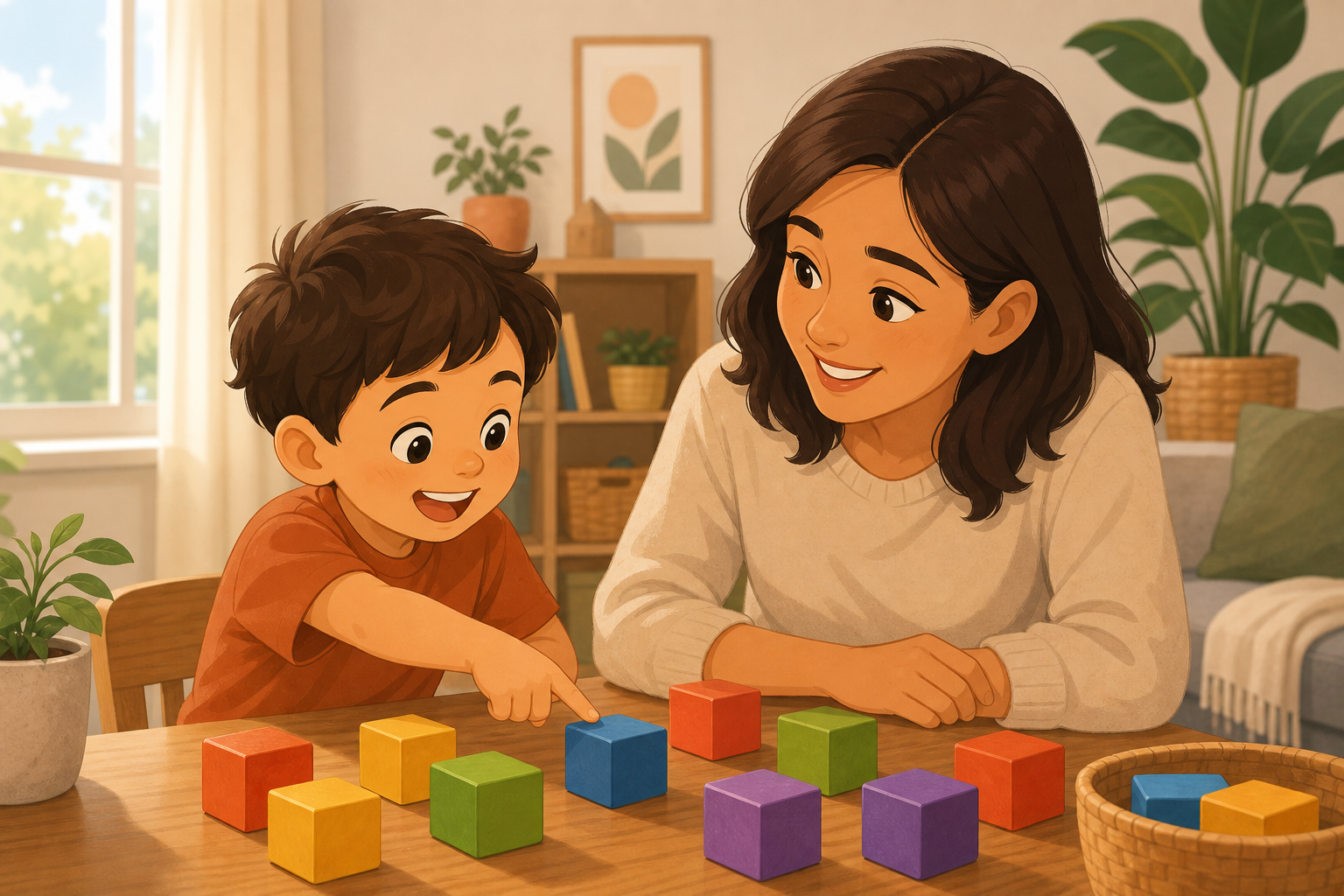
- Build one-to-one correspondence with whatever is nearby: count grapes onto a plate, toys into a bin, or stairs on the way up. The physical act of touching each object once is what builds the skill.
- If a child struggles with letter sounds despite repeated practice, ask the school to screen for dyslexia. Early identification makes a real difference in how quickly targeted support can begin.
Consistency matters more than intensity. A few minutes every day beats an occasional long session.
How the Super Teacher app Supports Kindergarten Readiness at Home
Over 100,000 families use the Super Teacher app for exactly the gaps this checklist surfaces, whether that's a child who knows letter sounds but needs structured reading practice, or one with decent number sense who needs help counting objects before addition begins. Super Teacher was built by a team of real educators led by a founder who taught at New York City's top-ranked public school: every lesson in the app is written and approved by teachers, delivered through a conversational voice interface that listens to your child's spoken answers and gives corrective feedback in real time, and the app is built from the ground up for young children, with no camera access, voice data deleted promptly after each session, and full COPPA and FERPA compliance.
The courses cover the full pre-K through early elementary progression. On the reading side: Learn Letter Sounds, Learn to Write Letters, and Learn to Read, a phonics-based program built around the science of reading. On the math side: number sense, one-to-one correspondence, and early addition. Every lesson is written by former elementary school teachers and delivered conversationally, so the child speaks answers aloud and gets real-time corrective feedback. Visit how Super Teacher works for a full walkthrough, the same way they would working one-on-one with a private tutor.
Pre-K lessons run about 5 to 8 minutes, short enough to fit before school, after dinner, or on a car ride. Visit the Super Teacher parent overview to learn how families get started. The household plan for unlimited tutoring at home is currently $20 per month or $100 per year, with no scheduling required.
Final Thoughts on Preparing Your Child for Kindergarten Success
The skills on this checklist are learnable, and most of them take nothing more than a few minutes and everyday objects around the house. Start with letter sounds and counting practice, keep it low-pressure, and you will be surprised how quickly your child picks it up. The time you put in now pays off across every school year ahead.
FAQ
What skills should my child have before kindergarten starts?
A free kindergarten readiness checklist for parents typically covers three areas: social-emotional skills (sharing, listening, following simple directions), fine motor skills (holding a pencil, turning pages), and academic foundations. On the academic side, the most load-bearing skills are knowing letter sounds (and not merely letter names) and being able to count physical objects one at a time. These two skills have the biggest downstream impact on how quickly your child picks up reading and math once school begins.
My child can recite the alphabet but struggles to sound out words. Is that a kindergarten readiness problem?
Yes, and it's one of the most common gaps parents miss on a kindergarten readiness checklist. Reciting the alphabet is memorization; knowing that the letter B makes a /b/ sound is phonemic awareness, and those are two separate skills. A child who knows letter names but not letter sounds will struggle with phonics from day one, so targeted practice on individual letter sounds before kindergarten starts is worth the time.
How do I use a free printable kindergarten readiness checklist pdf to find my child's gaps?
Print or pull up a free kindergarten readiness checklist and work through it one skill at a time with your child in a low-pressure setting: a game or a short activity, not a test. Mark anything your child can do independently, note where they need prompting, and flag anything they can't do yet. That gap list becomes your practice plan for the weeks before school starts. The most actionable items to tackle first are letter sounds and one-to-one counting, since both unlock the skills that come right after them.
What's the fastest way to help a preschooler build letter sounds and number sense before kindergarten?
Short, daily practice beats occasional long sessions. For letter sounds, point to letters on everyday objects (a cereal box, a street sign) and ask what sound each one makes; no worksheets needed. For number sense and one-to-one correspondence, count physical objects together: grapes on a plate, toys into a bin, stairs going up. Five to ten minutes a day is enough. If you want structured, teacher-written lessons delivered the way a private tutor would, Super Teacher's Learn Letter Sounds and number sense courses cover the full pre-K progression in lessons that run about 5 to 8 minutes each.
Does it matter which state my child lives in when using a kindergarten readiness checklist?
The core academic skills on a kindergarten readiness checklist (letter sounds, phonemic awareness, one-to-one correspondence, number recognition) are consistent across states because they reflect how children learn to read and count, going beyond what any specific curriculum requires. State-specific versions (such as a kindergarten readiness checklist for Tennessee, Texas, Ohio, or New Jersey) sometimes adjust the order of skills or add social-emotional benchmarks tied to local standards, but the academic foundations overlap almost entirely. A general checklist covers the skills that matter regardless of where your child starts kindergarten.