
Best Kindergarten Math Apps Teachers Pick: September 2026
There are a lot of math apps out there, and most of them look pretty similar at first glance. But teachers tend to recommend a much shorter list, and the reason usually comes down to one thing: does the app teach, or does it just practice? For kids in kindergarten and early elementary who are seeing these concepts for the first time, that difference is everything.
TLDR:
- Most kindergarten math apps only drill skills kids already have; very few actually teach new concepts from scratch.
- Real-time corrective feedback during a lesson matters far more than end-of-session scores for ages 3 to 8.
- Free options like Khan Academy Kids and Prodigy work for reinforcement but lack voice interaction and in-lesson adaptivity.
- Super Teacher offers voice-powered, teacher-scripted math lessons from pre-K through 5th grade at $20/month per household.
What Are Math Apps for Kindergarten and Early Elementary?
Math apps for kindergarten and early elementary are designed to help children ages 3 to 8 build foundational number skills, from counting and number sense through addition, subtraction, and beyond.
There is a meaningful split hiding inside this category. Most apps on the market are practice tools: they present problems, accept answers, and track scores. A child who already understands addition can use them to get faster, but a child who has no idea what addition means will just guess and move on. That's drill, and drill alone has a ceiling.
A smaller group of apps actually teach. They explain a concept, walk the child through it with feedback, and adjust in real time when the child gets stuck. Super Teacher for kids ages 3 to 10 is built around this second model. That distinction matters enormously for kindergarten and early elementary, where kids are encountering these ideas for the first time.
How We Ranked These Math Apps
Six criteria shaped this list.
- Voice and conversational interaction. Apps that require typing or tapping force a kindergartner to manage two problems at once. Voice removes that friction.
- Real instruction, beyond mere practice. The "I do, we do, you do" model is what works best. In Super Teacher, for example, the student first watches the "teacher" (Super Teacher) solve a problem, then the child solve similar problems with help (or "scaffolding") from Super Teacher, and when they are ready the child finally solves similar problems entirely on their own.
- Real-time corrective feedback. Feedback at the end of a session is nearly useless for a five-year-old. It has to happen in the moment, when the child is struggling or making mistakes. Immediate positive feedback matters just as much.
- Curriculum coverage. Pre-K through early elementary, with enough depth in number sense, addition, and subtraction to be genuinely useful.
- In-lesson adaptivity. Adjusting between lessons doesn't help much. Adjusting mid-lesson, as a child struggles with a specific problem, is where the real teaching and learning happens. Only apps like Super Teacher that take advantage of every "teachable moment" really work.
- Oversight tools for teachers and parents. Progress tracking, lesson summaries, and reporting matter for anyone using these apps in a classroom or at home with intention.
Best Overall Math App for Kindergarten and Early Elementary: Super Teacher
Super Teacher stands apart from every other app on this list because it actually teaches. Lessons are crafted by former teachers, not just generated by AI, which means a kindergartner encountering addition for the first time gets a science-grounded tutoring approach with real explanations, not a string of practice problems.
The math curriculum runs from number sense 1-10 and one-to-one correspondence all the way through fractions, estimation, and two-digit multiplication. In-lesson adaptivity works in real time: a child struggling with single-digit addition will get an infinitely patient tutoring session, while a child breezing through gets harder ones at their own pace. That adjustment happens during the lesson, not after.

Core strengths:
- Voice-powered, conversational lessons with immediate corrective feedback as the child speaks answers aloud
- Math coverage from pre-K through 5th grade in one place
- Real-time in-lesson adaptivity based on how the child is actually responding
- Lessons are pre-scripted and crafted by teachers; children never speak directly with a live generative AI or LLM.
- COPPA and FERPA compliant; camera never turns on; voice data deleted after transcription in the school version of Super Teacher.
- One household account covers all children at once, with per-child progress tracking and post-lesson parent emails, including unlimited tutoring for the whole household
Pricing is $20/month or $100/year for all the kids in the same household, reading and math included. Visit the Super Teacher for parents page for full details.
Khan Academy Kids
Khan Academy Kids is free, standards-aligned, and well-made for pre-K and kindergarten learners. It pairs short video instruction with tap-and-click questions and gives teachers a progress dashboard to track where kids stand.
Here is a quick look at what the app covers:
- Free math and reading activities for pre-K through kindergarten
- Short video lessons paired with tap-and-click question formats
- Teacher and parent progress dashboards
- Standards-aligned content for early grades
The core limitation is that Khan Academy Kids is not conversational. A child taps or clicks answers instead of speaking them, so the app cannot hear a child count aloud, catch a miscounting error as it happens, or prompt a retry before they move on. That kind of in-the-moment feedback is what separates real instruction from video-watching. A solid free supplement, but not a replacement for interactive back-and-forth. For a broader look, see our tutoring apps for kids ages 3 to 10 guide.
Prodigy
Prodigy is a game-based math app trusted by 800,000 teachers in 70,000 schools, offering standards-aligned content for grades 1 through 8. Its RPG format lets students answer math questions to earn in-game rewards, battle enemies, and progress through quests.
- Free access for teachers and students; optional paid parent membership
- Curriculum-aligned math content for grades 1 to 8
- Teacher dashboards, progress reports, and assignment tools
- Gamified reward systems including pets, quests, and in-game items
Good for classrooms that want a free, engaging reinforcement tool with solid reporting. Parents seeking a more complete solution can look into full-coverage homeschool for ages 3 to 10. The game mechanics genuinely motivate kids who resist traditional practice. The key limitation: Prodigy reinforces skills already introduced but cannot teach new concepts from scratch, and students sometimes treat the math questions as obstacles between rewards and not the actual point.
IXL Learning
IXL is a K-12 adaptive practice and assessment tool covering math, language arts, science, and social studies, with thousands of skills organized by grade level and standard.
Here is what the tool includes:
- Adaptive math practice from kindergarten through 12th grade
- Thousands of skill-specific exercises organized by grade and standard
- Real-time diagnostic reports and detailed progress tracking for teachers and parents
- Broad subject coverage including math, language arts, science, and social studies
Good for schools and families that want rigorous skill reinforcement and data-rich reporting across grade levels. The limitation is straightforward, though. IXL is a drill-and-practice product. As Common Sense Media notes, its "practice-and-drill approach may not thrill some kids," and there is no voice or conversational interaction. A kindergartner who does not yet understand addition cannot be taught addition by IXL, only quizzed on it, which is a meaningful gap for early elementary learners encountering concepts for the first time.
ABCmouse
ABCmouse is a broad early learning app by Age of Learning, targeting ages 2–8 with over 13,000 activities across reading, math, science, art, and music.
The volume of content is pretty impressive for the price, making it a reasonable pick for parents of toddlers and preschoolers who want a wide activity library, though parents of very young children may prefer a dedicated homeschool program for ages 3 to 5.
What They Offer
- 13,000+ activities spanning reading, math, science, art, and music
- Gamified reward systems including tickets, virtual pets, and themed activities
- Content for ages 2–8 across multiple subjects
- Parent progress dashboard
The core limitation is structural. ABCmouse is built around games and interactive activities, not direct instruction, so a child who already grasps a concept can practice it here, but the app cannot introduce a new math skill from scratch. The reward system, Pet Town, Hamster Maze, Bot Beats, is a well-documented distraction; many children gravitate toward the games and sidestep the educational content entirely. There are no classroom-facing tools worth noting.
Brighterly
Brighterly is a live, one-on-one math tutoring service where a human tutor delivers lessons over video using teacher-prepared materials.
What They Offer
- Live 1-on-1 math lessons taught by human tutors over video
- Personalized lesson plans aligned to each child's current level
- Covers math for K-12 students
- Flexible scheduling with remote lesson delivery
Prices start at $172 per month, which includes two sessions per week, with discounts for committing for 6-12 months. Good for families who primarily want a human tutor and can commit to scheduled sessions, particularly for older elementary students who need intensive support. The other limitation is access: Brighterly requires booking in advance, so there is no on-demand option. Lessons only happen when a tutor is available, which cuts out the 24/7 flexibility most working parents need, a key reason many families turn to Super Teacher's on-demand parent solution.
Feature Comparison Table of Math Apps for Kindergarten and Early Elementary
Feature | Super Teacher | Khan Academy Kids | Prodigy | IXL Learning | ABCmouse | Brighterly |
|---|---|---|---|---|---|---|
Conversational/Voice Interaction | Yes | No | No | No | No | Yes (human tutor) |
Teaches New Concepts | Yes | Partially | No | No | No | Yes |
Real-Time Corrective Feedback | Yes | No | No | No | No | Yes |
Grade Coverage | Pre-K through 5th | Pre-K through K | Grades 1–8 | K through 12 | Ages 2–8 | K through 12 |
Adaptive During Lessons | Yes | No | No | No | No | Yes (tutor-led) |
Teacher/Parent Progress Tracking | Yes | Yes | Yes | Yes | Yes | Yes |
Scheduling Required | No | No | No | No | No | Yes |
COPPA/FERPA Compliant | Yes | Yes | Yes | Yes | Yes | No specific claim |
Why Super Teacher Is the Best Math App for Kindergarten and Early Elementary
Super Teacher is the only option on this list that starts from zero and actually teaches, with unlimited sessions for an affordable price of $20/mo or $100/year. Instead of drilling skills a child already has, it walks a kindergartner through number sense, addition, and subtraction with the same scaffolding a private tutor would use, voice-powered and in real time.
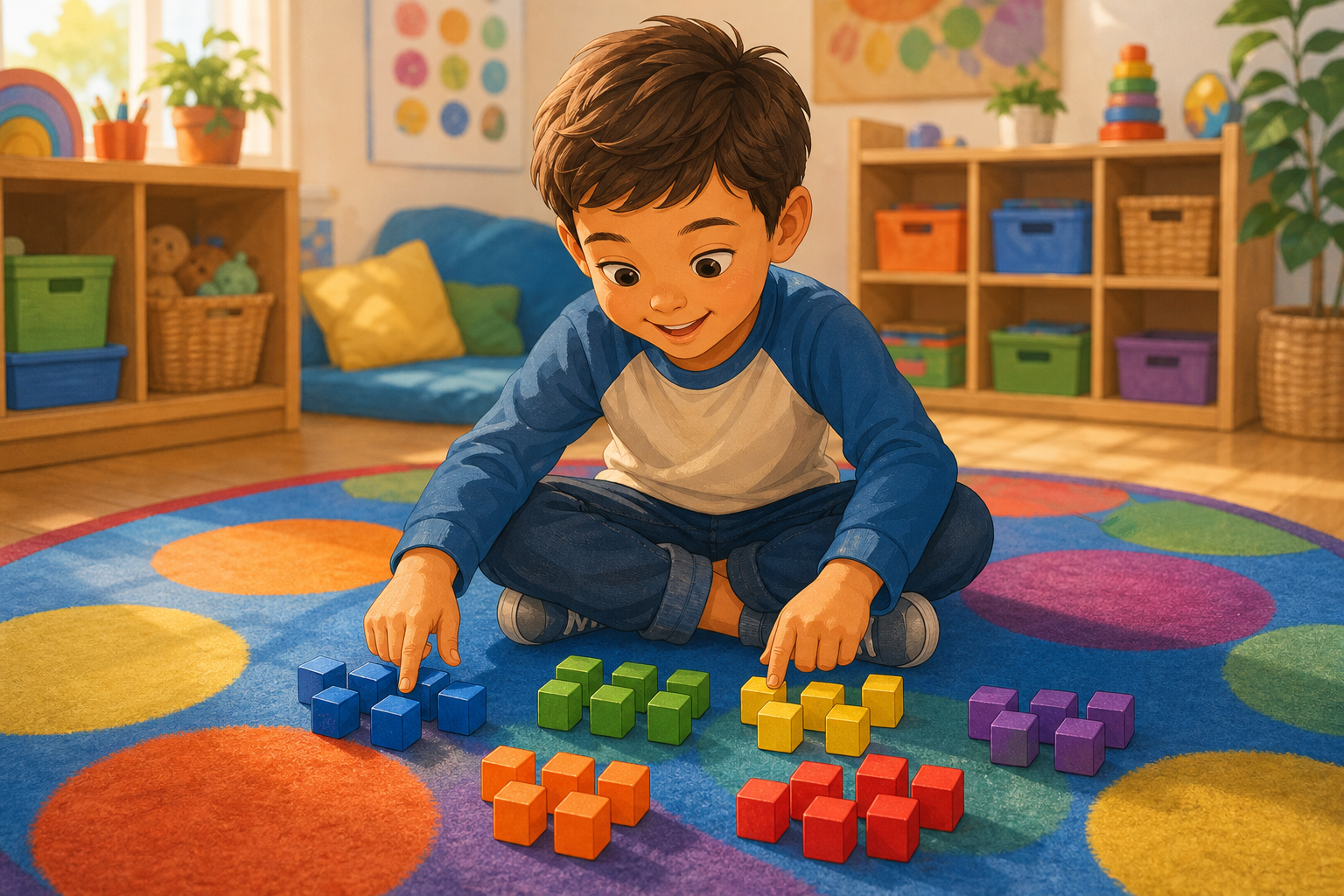
That matters because early math compounds. A child who does not solidly grasp addition slows down on subtraction. Fuzzy multiplication makes division harder, and fractions follow into algebra. Super Teacher is built to close those gaps at the foundation, covering everything from one-to-one correspondence through fractions, with lessons written by former teachers and adapted to each child mid-lesson as they work.
Final Thoughts on Math Apps for Kindergarten Teachers and Parents
There are good free tools on this list, and there are tools that go deeper into actual instruction. Your child's starting point should guide the pick. Kids who are still building number sense need something that teaches, and finding that early makes everything that follows a little easier.
FAQ
How do I choose the right math app for my kindergartner from this list?
Start by asking whether your child needs to learn a concept for the first time or just practice one they already know. If they need actual instruction, Super Teacher or Brighterly are the only options on this list that teach new material from scratch; if they need reinforcement and practice, Prodigy or IXL Learning will serve that purpose well.
Is Super Teacher or Brighterly the better option for kindergarten math tutoring?
Super Teacher is the stronger fit for most families because it requires no scheduling, works on-demand at any hour, and offers unlimited sessions for $20/mo for every kid in the household. Brighterly makes more sense if your child truly needs a human tutor and you can commit to booking sessions in advance, and you are comfortable paying $172/mo for 2 weekly sessions per kid.
Can IXL Learning or Khan Academy Kids teach my child addition if they have never seen it before?
No, not really: both IXL Learning and Khan Academy Kids are built around practice and assessment, so they quiz children on skills instead of introducing them. A child encountering addition for the first time needs a tool that walks them through the concept with feedback, which is something those two apps are not designed to do.
Which math apps on this list work without scheduling a session in advance?
Super Teacher, Khan Academy Kids, Prodigy, IXL Learning, and ABCmouse are all available on-demand. Brighterly is the only option that requires booking a time slot with a human tutor, which makes it the least flexible choice for daily use.
How do I know if a math app is safe to use in my child's classroom?
Look for COPPA and FERPA compliance, which Super Teacher, Khan Academy Kids, Prodigy, IXL Learning, and ABCmouse all meet. Super Teacher carries an extra layer of protection because its lessons are fully pre-scripted by teachers and the AI generates no live responses, which helps it clear school procurement rules that block other AI tools.